

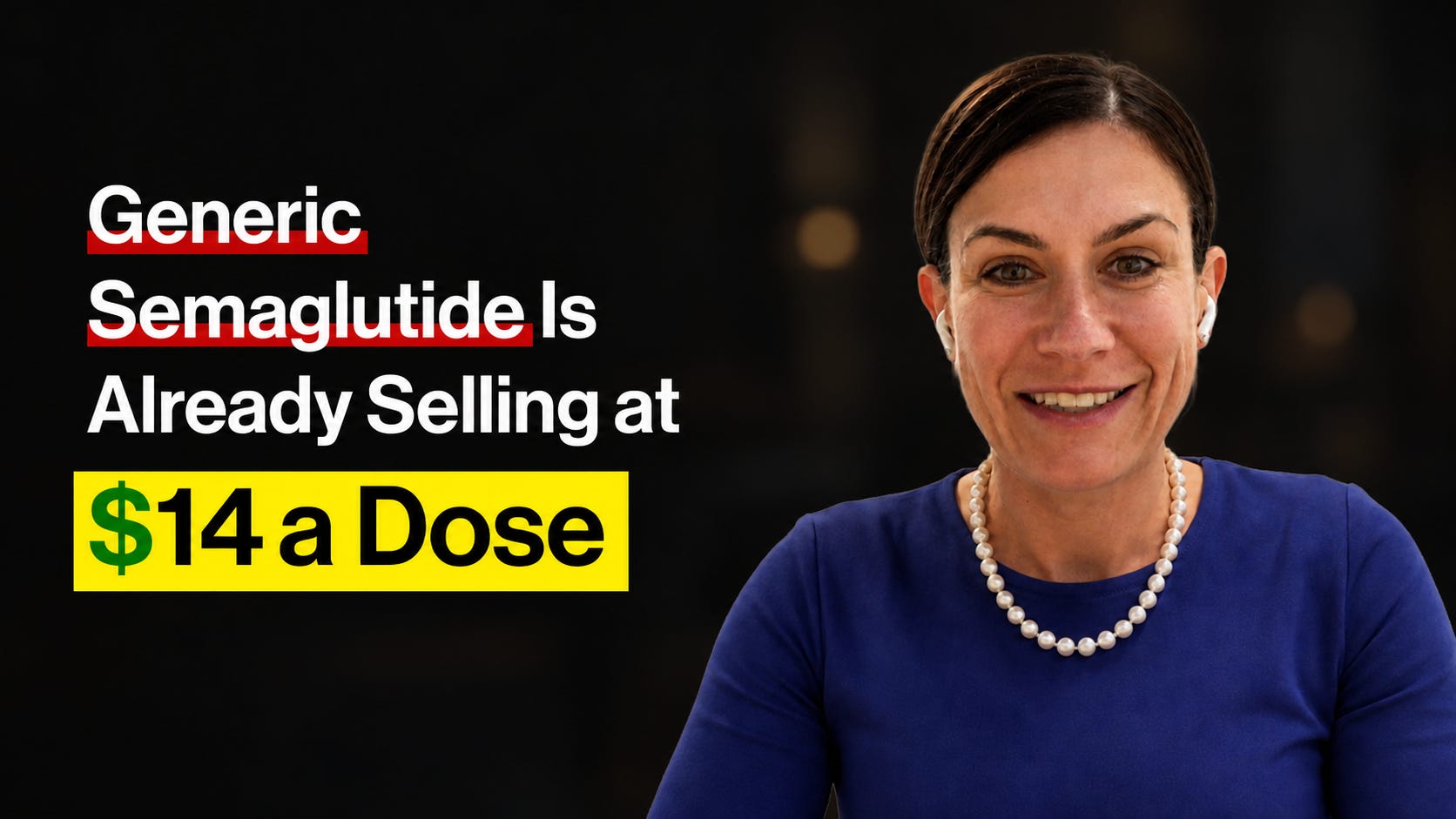
Let’s fast forward to 2032, when semaglutide has lost its patent protection in the UK & US and generics have flooded the market, priced at around £40 and delivering ~15% weight-loss within the first year of use.
In that world, which is frighteningly close, what does a new entrant to the consumer weight-loss market have to do to defend itself from Eli Lilly’s panoply of best-in-class drugs like Reta and Eloralintide, delivering 25–30% weight-loss with a direct-to-consumer (DTC) distribution channel shipping their drugs across the entire Western world?
Considering that vision of the future, I’m bearish on the vast majority of new pharma companies entering the obesity market. Without clear differentiation or a defined value proposition as to why the drug should exist, the newer drugs are failing to convince me they can deliver enough benefit beyond what is already available, to enough people, at a price point that sustains an obesity franchise.
My recent conversation with Emily Field made me more interested in a few potential exceptions, but it hasn’t changed my overall view that the majority of new entrants are going to struggle in this crowded market.
Emily Field is the head of US biopharmaceuticals equity research at Barclays, and she has covered both Novo Nordisk and Eli Lilly. Emily spends her time assessing which new pharma companies can displace the incumbents, and which will struggle to justify their place in the overall market.
Watch my full conversation with Emily below and read on for my three reflections.
Listen on Spotify · Listen on Apple Podcast · ChatGPT analysis
Here are three areas where I think new entrants could still compete:
1. Weight-Loss Efficacy Earns a Premium in the Market
India provides early evidence that consumers will pay a substantial premium for weight-loss efficacy. Despite some generic semaglutide products costing as little as $14 per month, consumers are continuing to buy branded tirzepatide, confirmed by Lilly’s Q2 earnings call that reported sustained prescription growth. Morgan Stanley reported robust demand for the 5mg dose of Mounjaro in India, and strong uptake of higher doses, even though Lilly’s drug costs roughly three times as much as Natco’s generic semaglutide pens.
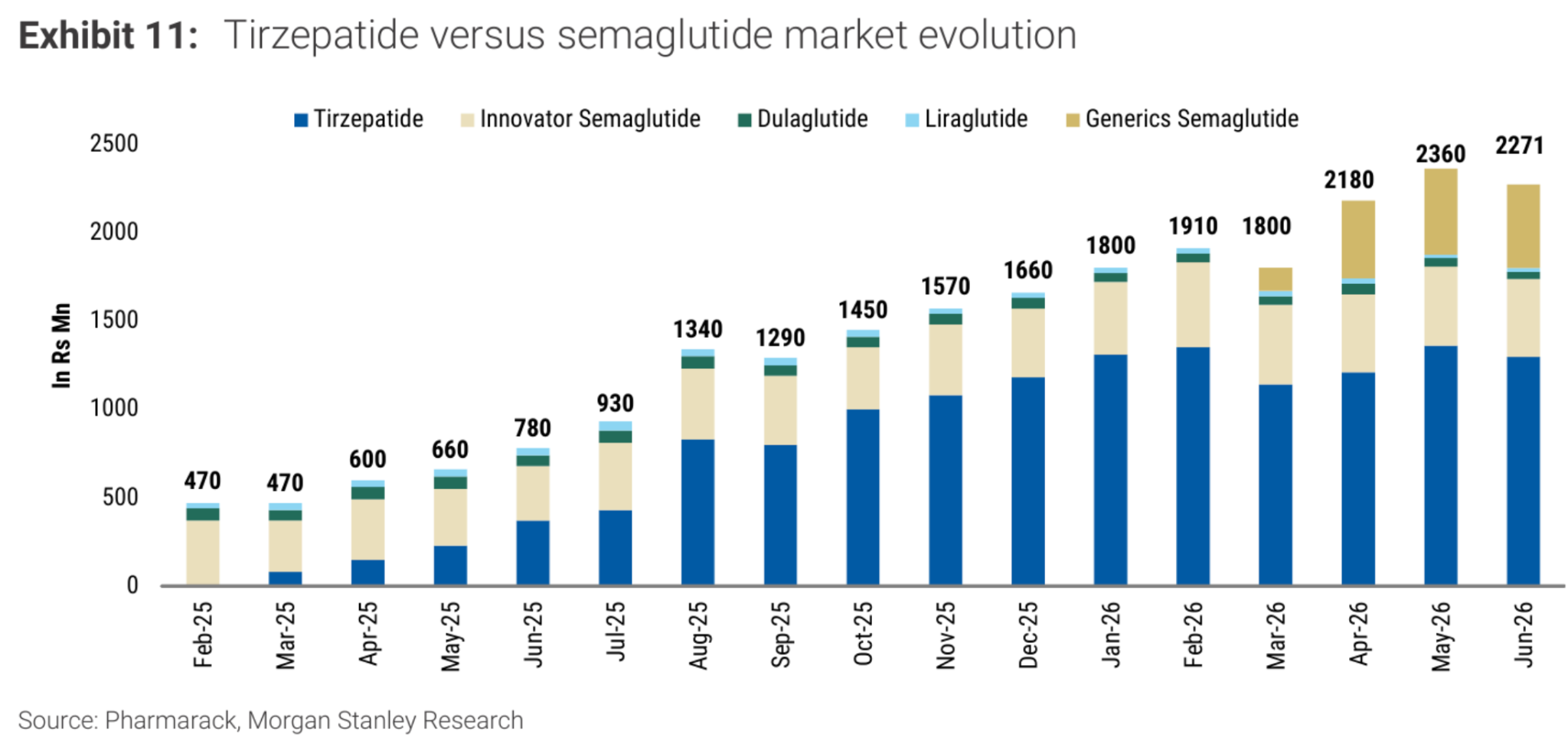
Emily alluded to the fact that Lilly’s strategy is targeting the middle- to upper- class consumer segment with high disposable income who can afford the “best in class” experience. This strongly suggests that greater weight-loss efficacy can provide enough clinical differentiation for a drug to remain resilient when generics come onto the market.
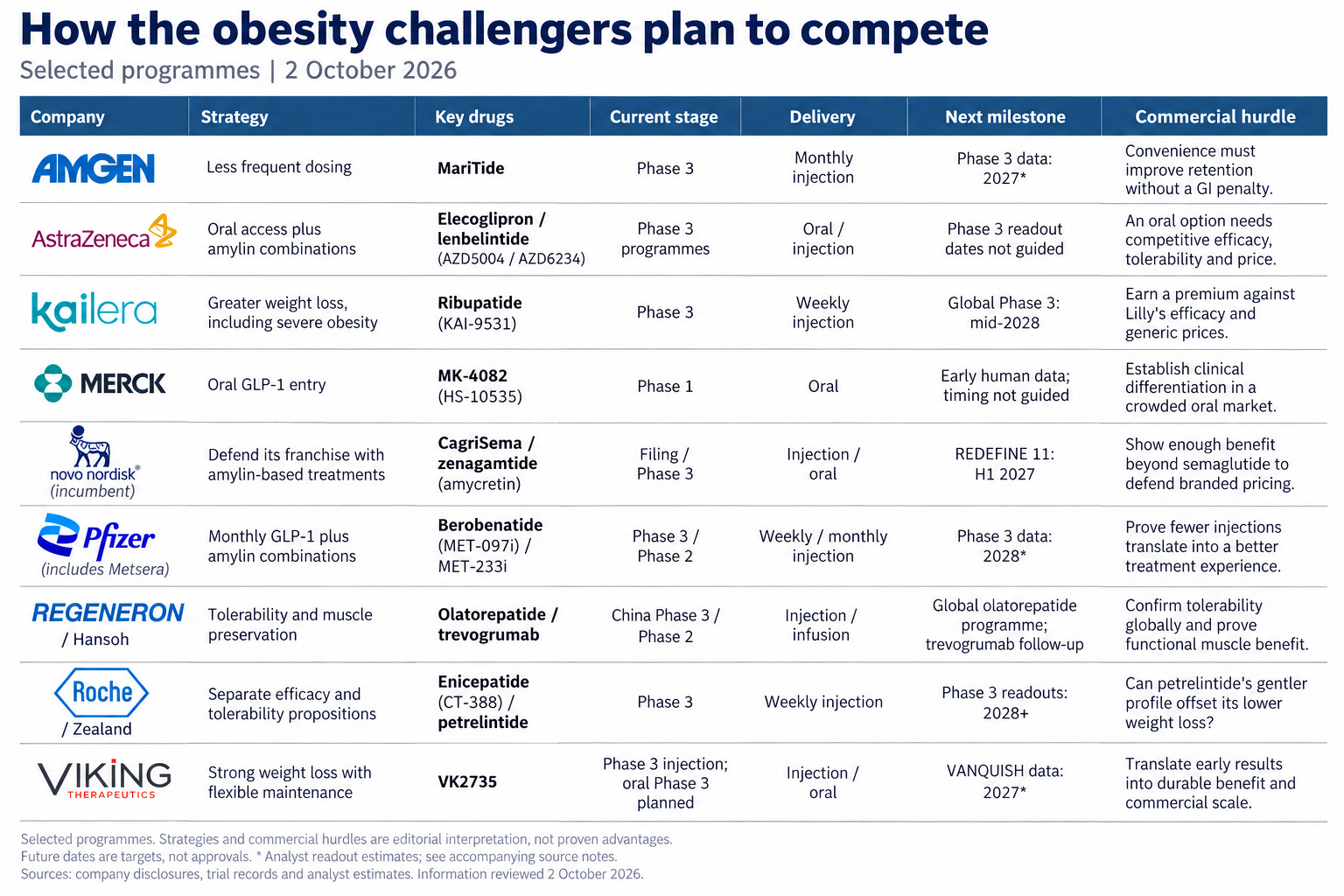
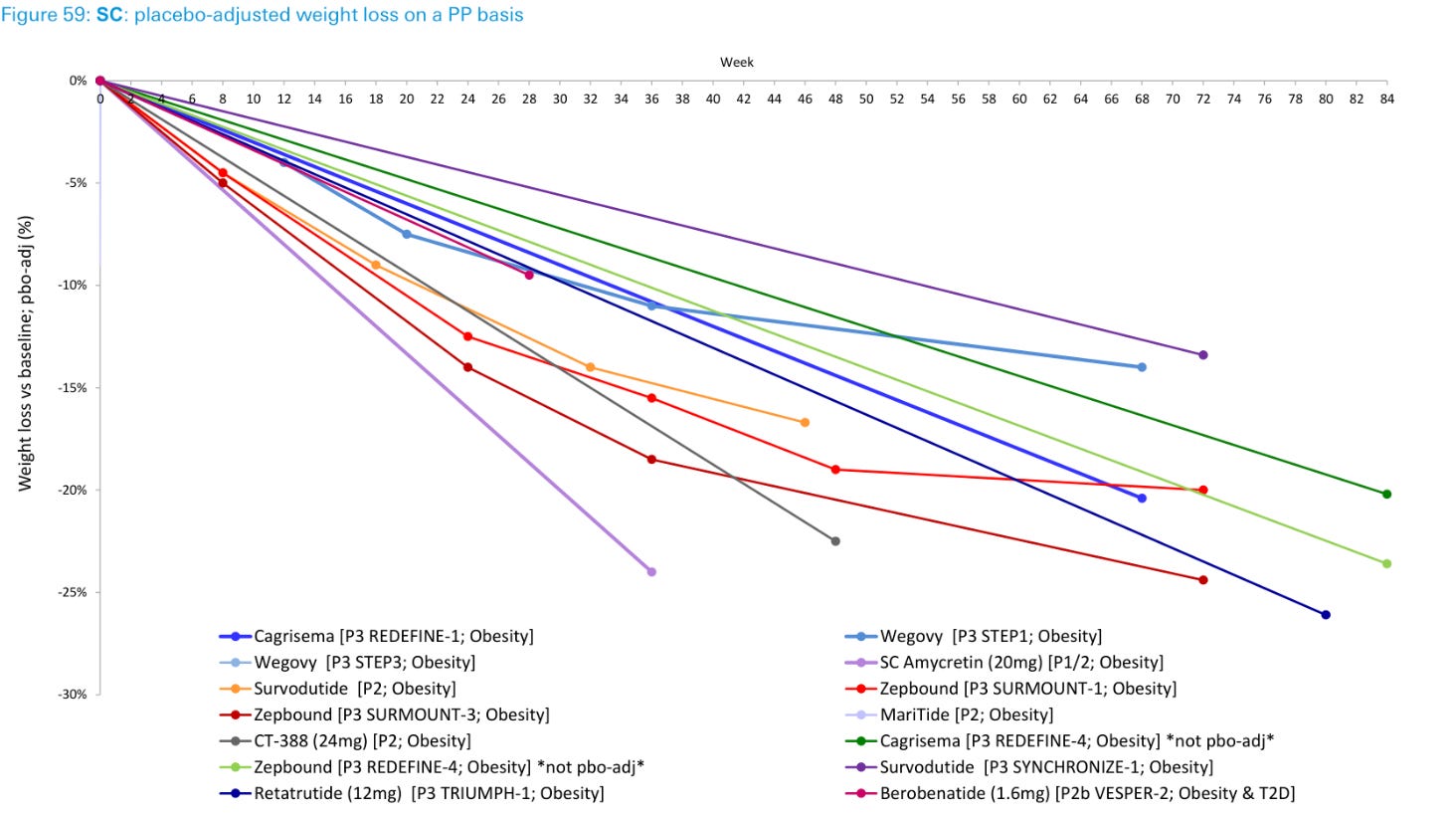
For now, I’m sceptical of new entrants whose commercial strategy depends on beating Lilly on weight-loss alone. None of the leading challengers has yet to match retatrutide’s roughly 28% average weight-loss, reported in a large Phase 3 obesity trial (expected ~2027/28). A new entrant trying to compete with Lilly on efficacy is like a Toyota trying to compete with a Ferrari on performance rather than on reliability. It’s not a viable strategy.
2. If You Can’t Improve Efficacy, Reduce Side Effects
How do you win market share if you can’t compete on weight-loss efficacy? In my view, tolerability is one of the more credible opportunities to carve out a niche; patients are willing to lose less weight over time if they experience fewer side effects. And I think there are two routes here to win market share based on this strategy.
You could target patients who’ve stopped taking GLP-1s because they couldn’t tolerate the nausea and vomiting,attracting customers who’d simply pay more for a treatment that makes them feel less unwell: i.e., people with modest weight-loss goals who prioritize a gentle experience. Or you could target self-employed people who resist treatment because they can’t afford to suffer sick days.
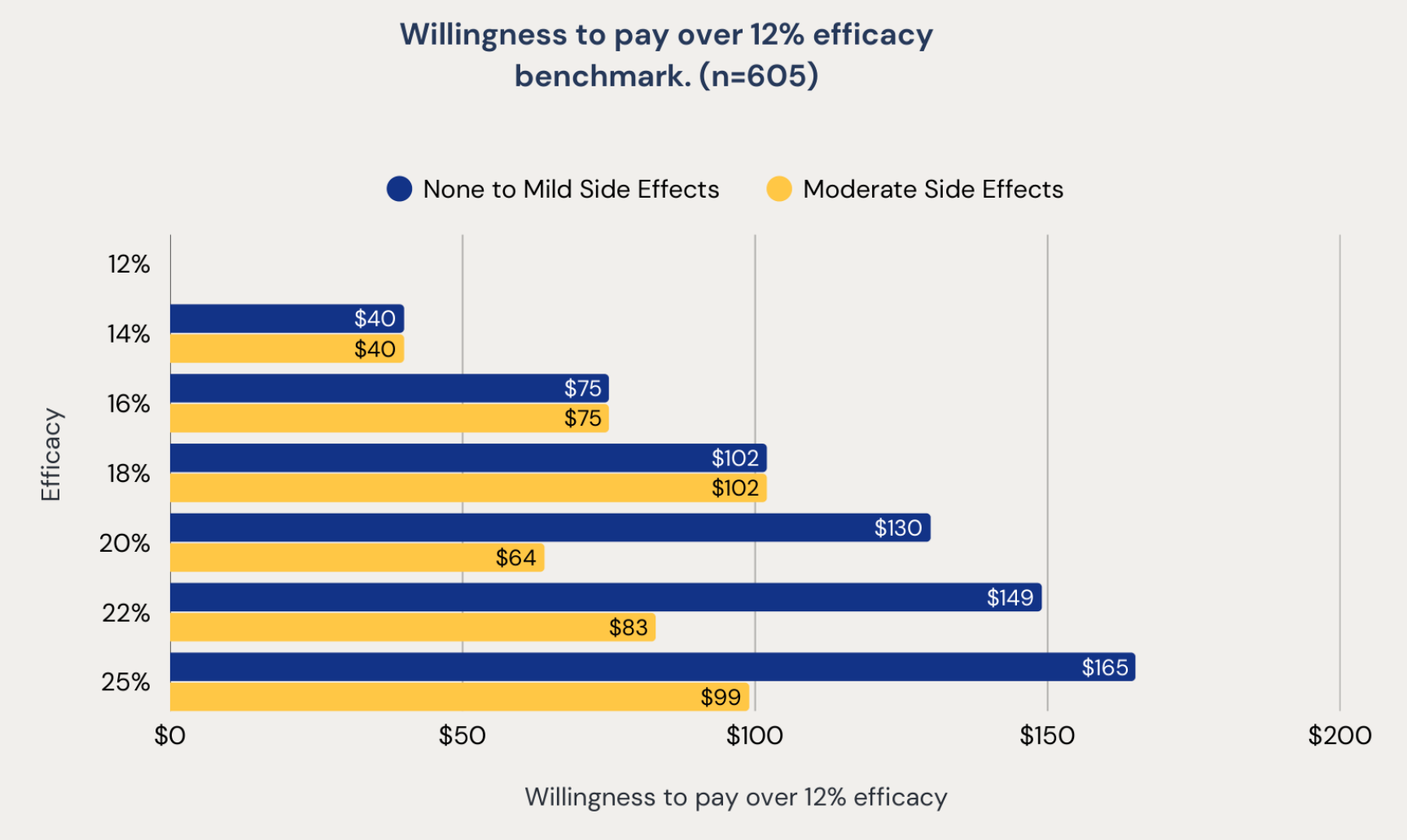
Thrivable’s conjoint analysis of 605 patients also suggests there is a strong willingness to pay for a drug with few side effects. Given the same weight-loss efficacy of 20%, respondents were willing to pay double for a drug with minimal to no side effects. That’s quite telling!
In addition to the analysis above, a drug with materially lower nausea and vomiting rates than semaglutide or tirzepatide could be an extremely attractive partner for DTC providers. If better tolerability keeps patients on treatment for longer, that’d increase customer lifetime value and, provided costs remain low, generate more profit for the provider. There’d be a strong incentive for DTC companies to favor such drugs.
When it comes to tolerability, there are two drugs that stand out to me: Roche and Zealand’s petrelintide, and Regeneron and Hansoh’s olatorepatide.
Petrelintide reported nausea in 19.6% of participants and vomiting in just 3% across its Phase 2 treatment groups which is an extremely encouraging tolerability signal. The trade-off is a modest weight-loss figure of up to 10.7% after 42 weeks, but the commercial success will depend a lot on how the tolerability proposition is communicated to patients.
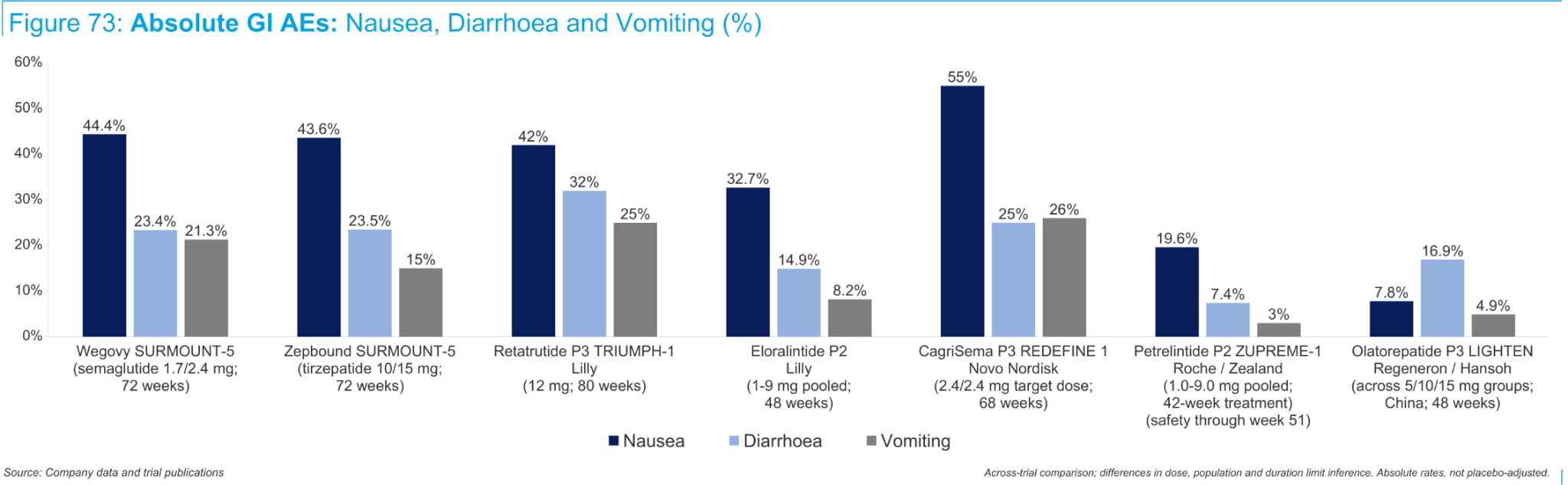
Olatorepatide also looks particularly interesting, because it could offer that gentler experience alongside substantial weight-loss. Its Chinese Phase 3 trial reported nausea in 7.8% and vomiting in 4.9% of participants across treatment groups, with the highest dose delivering 19.3% weight-loss after 48 weeks.
If these findings hold up in global trials, these drugs could enter the market with a significant edge on Eli Lilly’s drugs, which in the best cases report 43.6% nausea and 15% vomiting rates in patients (for Tirzepatide).
3. And If You Can, Compete by Preserving Lean Muscle-Mass
There has been plenty of discussion lately about the “quality of weight-loss” from these drugs: how much of that weight is fat and how much is lean muscle-mass. My conversations with Professor Miras and Emily Field revealed uncertainty about the clinical benefit of lean-mass preservation. Does it translate to greater strength or improved physical functioning? If so, for whom and by how much?
The jury is still out.
Nonetheless, I think the consumer proposition is attractive: “lose fat, keep muscle.” And my instinct is that people would pay a premium for that outcome, at least in the direct-to-consumer market.
I see two potential paths to success with this strategy: (1) develop a weight-loss drug that preserves more lean mass than semaglutide or tirzepatide, and work with providers to educate patients in the funnel; or (2) develop an add-on, companion-drug for generic semaglutide that preserves lean mass. If a manufacturer could achieve either of these, they would give consumers a reason to pay a premium.
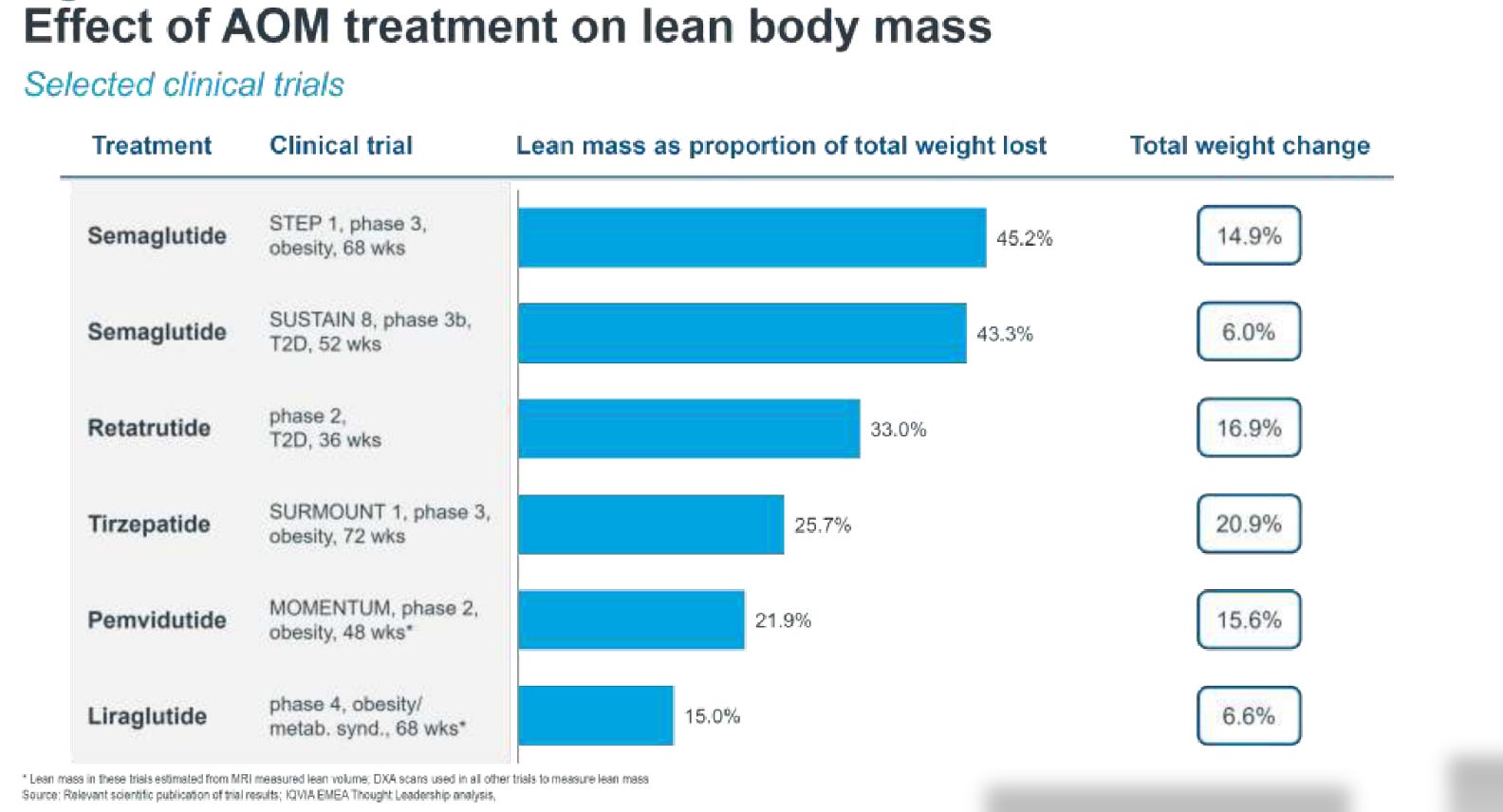
On the weight-loss drug side, Altimmune’s pemvidutide looks interesting so far, with approximately 78% of the weight lost coming from fat and 22% from lean mass in its body-composition analysis. I also expect more weight-loss trials to incorporate DEXA or MRI measurements as companies begin to measure a drugs’ “quality” of weight-loss.
Regeneron is already taking the second route, developing an add-on drug called trevogrumab. It’s a branded, muscle-preserving drug designed to be used alongside cheap, generic semaglutide, and it could help garner this new entrant some market share.
As the debate around the quality of weight-loss evolves, I do expect body composition to feature more prominently in clinical trials and how pharma talks about their drugs.
Cheap semaglutide is going to bring millions more patients into obesity treatment, but I think we’re confusing a growing market with a growing opportunity for every company in the market. Elli Lilly is already garnering a premium and retaining customers with their superior weight-loss efficacy, so the more interesting ways to differentiate a drug, rather than trying to add a few percentage points to the weight-loss figure, is to guarantee gentler side effects or better muscle preservation.
**The views, opinions, and recommendations expressed in this essay are solely my own and do not represent the views, policies, or positions of any other organization with which I am affiliated. This content is provided for informational purposes only and should not be considered medical, legal or investment advice.**