


Author’s note: Telehealth is already reshaping healthcare, but founders still face hard choices around retention, platform navigation, and building patient trust. Light-it, a health tech software development company, approached me to highlight their work and I wanted to do this in a way that felt genuinely useful rather than salesy. If you’re building a GLP-1 telehealth company in the US and struggling with conversion or patient experience, I think they could really help.
I retain full editorial independence. If you have feedback about Light-it, how I approach sponsorships, or want to work together in Q1 2026, just reply to this email.
The moment you click on a direct to consumer telehealth website, your customers are looking for signals of trust and credibility. A clunky interface or a confusing patient consultation flow will tank your conversion quicker than an AI-generated doctor whose lab coat has three sleeves.
Light-it’s thesis is that the digital health companies who win long-term will be the ones whose platforms feel trustworthy right from the get go. Very simply that means polished interfaces, intuitive flows and prescription ordering that feels super quick and safe. What I like is how Light-it uses data to spot where patients drop off in the user flow and fix it before it becomes a conversion problem.
What they actually build
Light-it operates across the full stack of digital health, and a few things stood out to me.
First, the high-leverage operational layer. Scheduling for video consultations and insurance and billing integrations is painful to build yourself and easy to get wrong. Light-it handles this so founders don’t have to reinvent the wheel or debug payment flows at 2am.
Second, the engagement and retention layer. This is where most platforms fall short and where Light-it has clearly thought hard. Milestone tracking and patient satisfaction loops are systems that keep patients on their medication and give you rich data on why they adhere to medication or why they churn.
And of course, the unsexy stuff matters too. HIPAA compliance isn’t treated as a box to tick at the end. It’s built into every design decision from the start and that discipline is really important because the regulations that trip up healthtech companies are usually the ones they underestimated. Light-it’s team has clearly been through enough builds to know where founders get burned.
The proof
When Light-it approached me, I wanted to see if what they built actually moved the needle. They had some really cool examples and experience working in the GLP sector but I liked how they helped one telehealth company that was struggling with retention and scalability. Light-it built a custom platform for messaging, community, and coaching to keep patients engaged long after the initial prescription. The UI was slick, the patient flows felt intuitive, and the whole thing would’ve taken in-house design and product teams many, many months to execute.
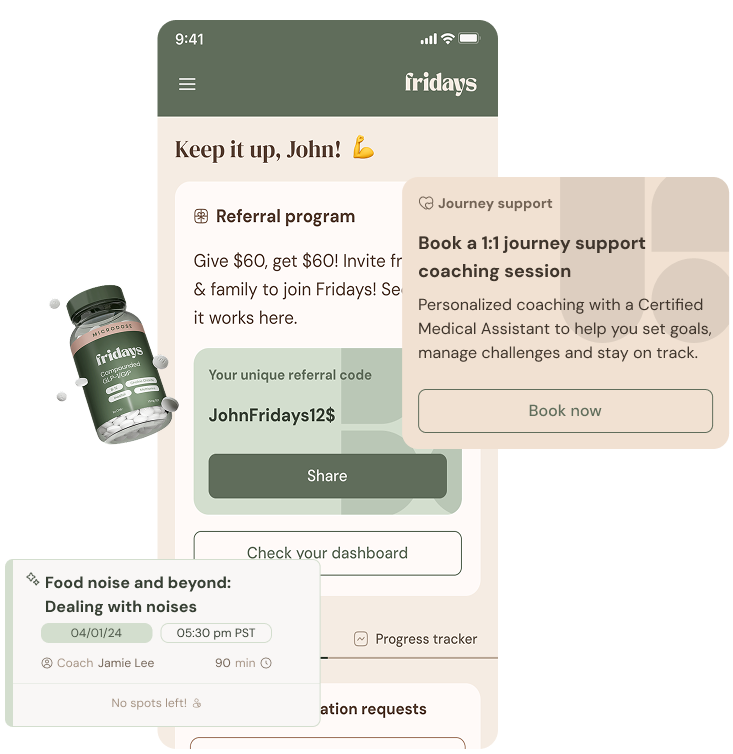
Read the full Friday’s Health Case.
Working with them
One of the things I hate most is slow communication. Startups live and die by momentum, and vendors who take days to respond break that rhythm. From the first conversation, Light-it operated with speed. Responsive, professional, and clearly experienced in the space, hearing about their work and promotion at HLTH in Las Vegas reinforced to me that these are people who understand the market they’re building for.
The simple promise
The GLP-1 boom has created a land grab in digital health and the companies that win will be the ones who build platforms patients actually trust and use. That means investing in design, engagement systems, and infrastructure that scales.
Light-it is one answer to that problem. If you’re building in this space and need a partner who moves fast and ships polished work, they’re worth a conversation.