


The internet is currently full of men in their thirties injecting themselves with vials of liquid bought from websites that explicitly say the contents are not for human consumption. Those vials contain peptides, which are short chains of amino acids the body uses as signalling molecules, and the working assumption among the men in question is that, because GLP-1s are peptides and GLP-1s clearly work, other peptides are sitting there waiting to do for sleep, recovery, wound-healing, and muscle preservation what GLP-1s do for weight-loss.
The clinical evidence for this is, to put it kindly, thin.
Doubts about efficacy don’t seem to matter much, though. Once a person has crossed the psychological barrier of one weekly peptide injection, another peptide (even if unregulated and unapproved) no longer feels like any sort of worrisome escalation. GLP-1s seem to have, in effect, become a gateway drug, because demand for peptides has exploded.
How much demand has exploded is still a question. Pinning down the size of an underground market is a finger-wavy exercise, but the figures I have heard from several insiders put the total addressable market somewhere between $1 and $2 billion.
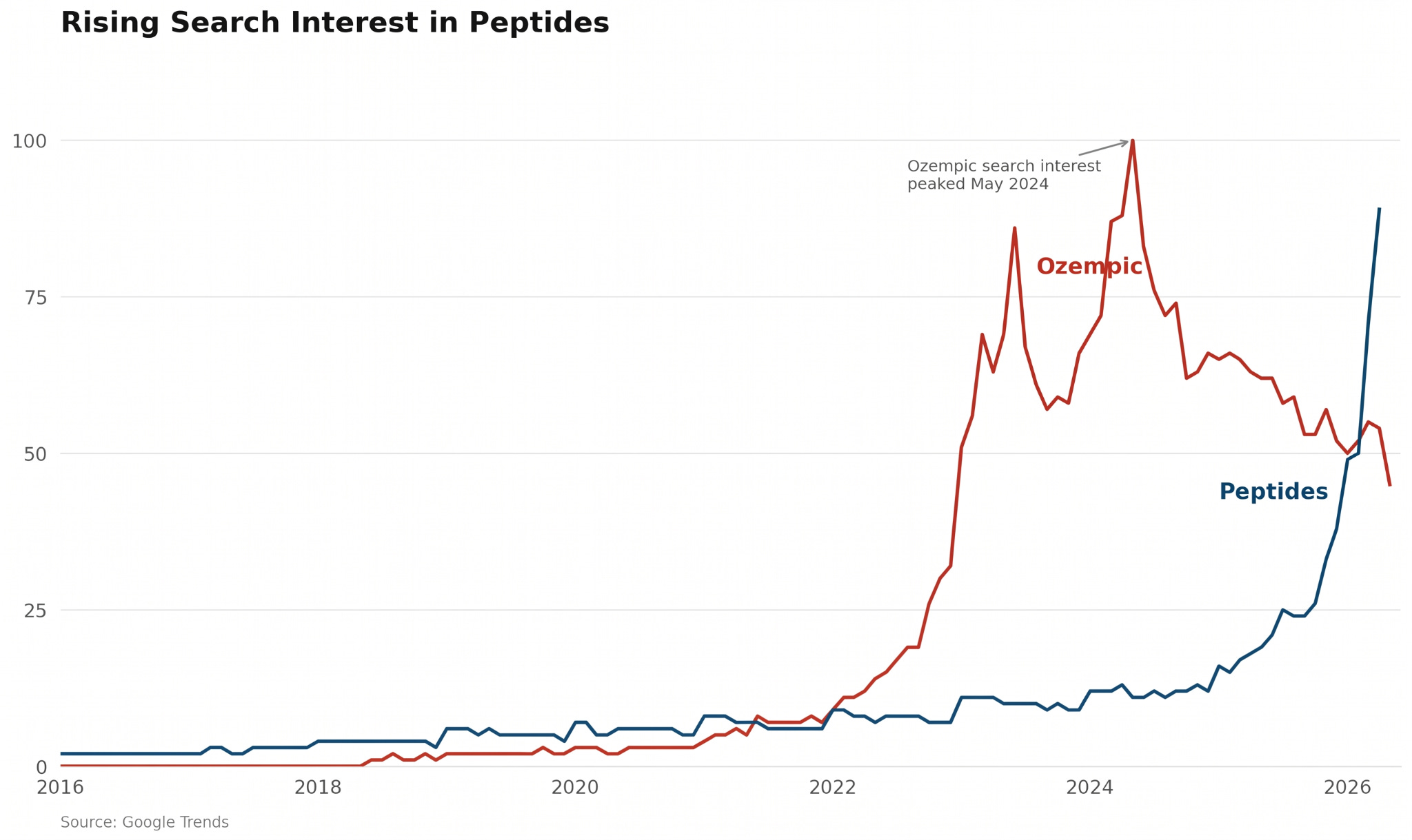
That is a lot of cash-pay revenue sitting in a market that, until very recently, did not technically exist. Now, of course, every direct-to-consumer telehealth platform is thinking about peptides, either as a cross-sell into their existing GLP-1, TRT, and longevity customer bases or as the foundation of a standalone vertical. There is even a smaller cohort of newer players thinking about peptides as being their entire business.
The good news (if you’re a founder) is that the market may not stay underground for much longer.
The FDA has removed 12 peptides from Category 2, the bucket reserved for substances with “significant safety concerns.” Those peptides will be reviewed by the Pharmacy Compounding Advisory Committee across meetings in July, 2026, and February, 2027, where independent experts will decide whether to add them to the 503A Bulks List, the official register of substances that compounding pharmacies can legally use to make prescriptions.
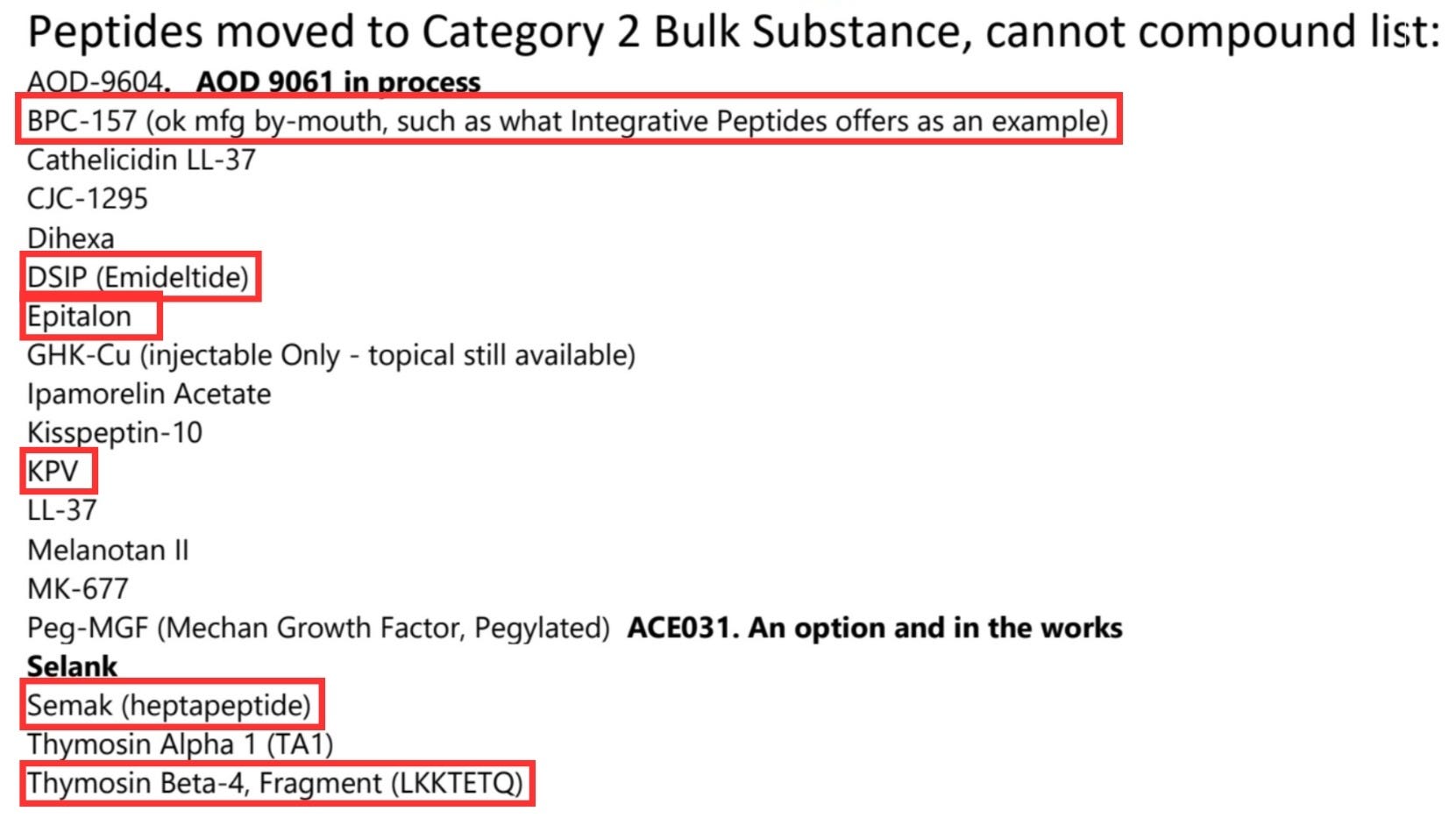
As I’ve been researching this market, I spoke with Tim Gutwald, who has spent roughly twenty years as a healthtech lawyer working on the legal infrastructure for telehealth, prescribing, compounding, and DTC healthcare. He helped me understand what this regulatory moment means for the platforms preparing to enter the peptide market.
Much of our conversation came back to the fact that once everyone can sell peptides legally, the molecule will be commoditized, and the category will become a race to the bottom on price and margin.
The interesting question, then, is this: how can DTC platforms (like Noom, Superpower, or smaller players) turn peptides into a scalable revenue stream?
From my own research and my conversation with Tim, these are the three most important things founders need to focus on when it comes to peptides.



